
Law Enforcement
Language differences, national traditions, religious beliefs and customs, and other factors shape how individuals and communities behave and interact, and successful policing depends on criminal justice professionals’ ability to properly handle these differences. Statistics show that ethnic and racial minorities, including primarily Black and Hispanic communities, are consistently subject to excessive policing (Vitale, 2021). As a result, the underlying sociopolitical and economic issues are substituted with mutual biases and misconceptions that inhibit potentially fruitful communication and cooperation.
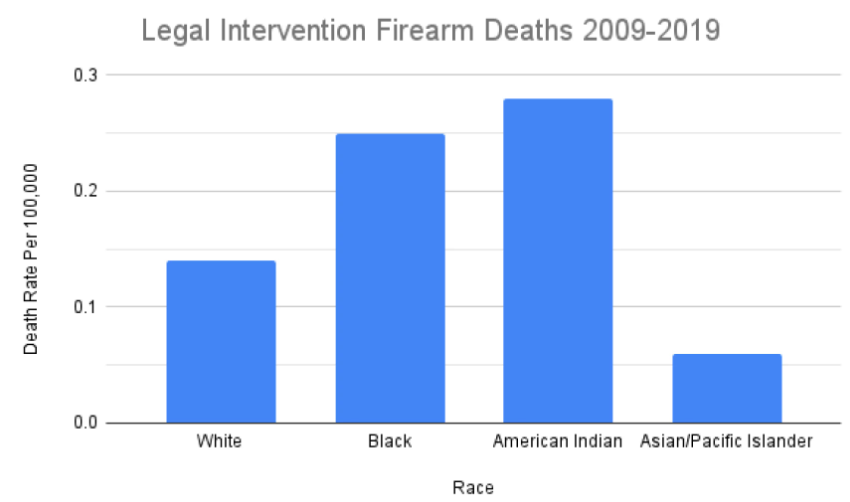
Police militarization and inadequate field decisions made under the influence of biases generate a social climate of systemic discrimination and violence. The history of the drug war has resulted in “continuing mass incarceration, arbitrary arrests and detention, and devastating police brutality,” disproportionately affecting Black, Brown, and Indigenous populations (Daniels et al., 2021, p. 120). (Figure 1). These facts suggest that if Sharanda Jones were white, the criminal justice system would likely not treat her with an evident lack of impartiality (Martyn, 2015). Physical or mental disabilities may also jeopardize individuals’ capacity to receive a fair judgment, which was the case with Sharanda Jones’ mother (Horwitz & Kahn, 2015). A lack of criminal justice professionals with specialized competence results in inadequate handling of such cases.
LGBTQ+ individuals have also been historically marginalized and mistreated by the US criminal justice system. For example, the New Orleans Police Department is infamous for its long history of discrimination against LGBT individuals, which has not been addressed so far (Gaynor & Blessett, 2020). This issue often aligns with the existing racial and ethnic biases, resulting in particularly harsh treatment of LGBTQ+ individuals of non-White descent (Gaynor & Blessett, 2020). Therefore, it is safe to assume that openly identifying as an LGBTQ+ individual would only result in a more rigorous and dedicated mishandling of Sharanda Jones’ case.
Courts
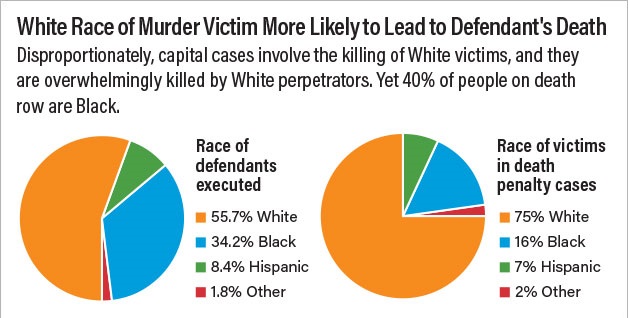
In the US, drug crime sentencing is often based on inadequate guidelines that can be manipulated depending on the level of the responsible official’s cultural competence. The US court system often forces decision-makers “to look at their calculators instead of into the eyes of the defendants they were sentencing,” which resulted in a life sentence for Sharanda Jones’ first drug arrest (Horwitz & Kahn, 2015). Furthermore, the existing bail system significantly limits the possibilities of low-income families, placing extreme financial strain on them (Oakes & Fleming, 2018). Literature also reflects the persistent discrepancies related to death penalty sentencing, with Black and Latino defendants historically experiencing disproportionately inflated death sentencing rates (Johnson, 2020) (Figure 2). This issue largely arises from the overrepresentation of these populations in the convicts’ roles and the existing biases and misconceptions of criminal justice professionals.
Mental illnesses and LGBTQ+ status also affect individuals’ experience in court, impacting sentencing decisions and the applicability of certain procedures. Currently, the lack of an effective, culturally sensitive evaluation process contributes to the criminalization of individuals with mental illnesses, limiting their access to quality care (McCallum & Gowensmith, 2020). The existing ambiguity in policies and a lack of comprehensive training also often result in the mistreatment of LGBTQ+ individuals, particularly in cases involving domestic violence between LGBTQ+ couples (Russell & Torres, 2020). Though Sharanda James’ case did not show signs of these types of discrimination, the biased treatment she received in court aligns well with the overall issues affecting marginalized groups.
Prisons
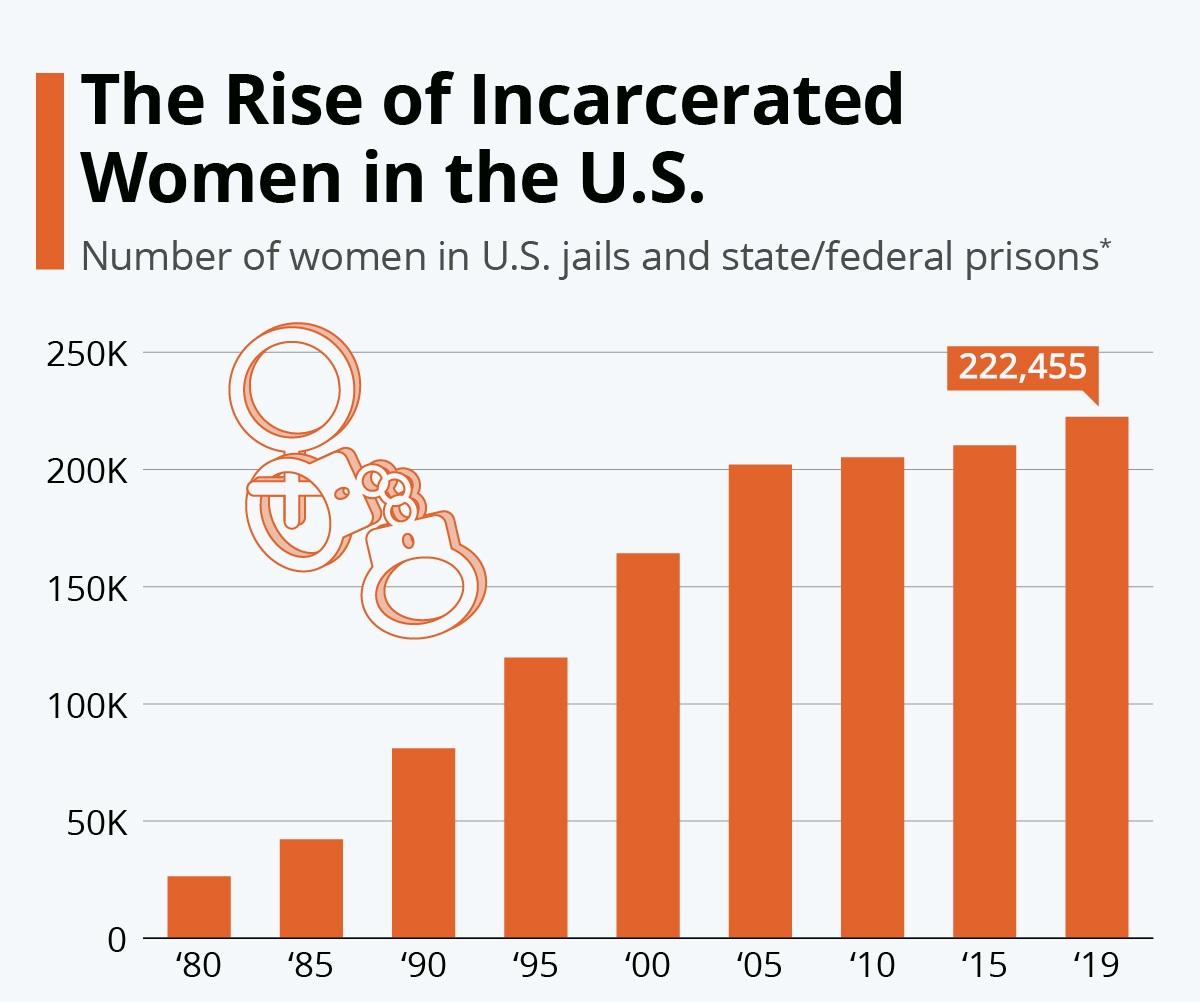
Insufficient cultural competence often leads to inadequate correction policies that fail to fulfill the primary purposes of punishment. In the US, incarcerated women have comparatively higher rates of mental illness and substance misuse and experience higher rates of physical or sexual abuse before going into prison (Bucerius & Sandberg, 2022). Female prisons in other countries often exhibit vastly different tendencies, which suggests that the social marginalization of women in American society impacts discriminatory correctional practices (Bucerius & Sandberg, 2022) (Figure 3).
A lack of oversight results in the women’s continuing psychological and physical degradation, potentially leading to fatal consequences for those with pre-existing medical issues, like in the case of Sharanda Jones’ mother (Horwitz & Kahn, 2015). Transgender prisoners experience elevated physical and psychological trauma risks due to a lack of legal gender recognition and discrimination among prisoners and prison staff. The same applies to the mentally ill, disabled, pregnant, and other vulnerable categories who often lack access to the required care. Furthermore, while male correction officers are rarely placed in female prisons, misogynist biases still affect a large part of the female prison population.
Diversity in Recruitment
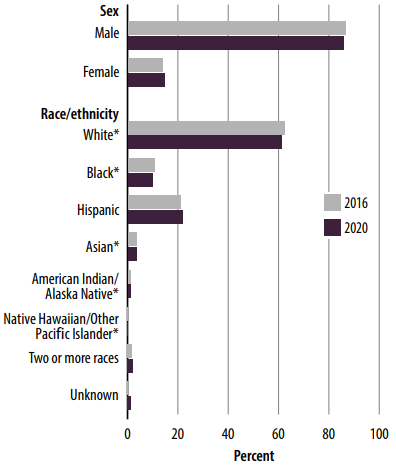
One way to address the discussed issues is to increase diversity among criminal justice professionals. According to the latest data, women represent about 15% of federal law enforcement officers, while Black and Hispanic individuals only amount to 10% and 21%, respectively (Figure 4).
Age-old standards for physical fitness usually do not account sufficiently for gender differences, resulting in underrecruitment of female candidates. Furthermore, the existing requirements for drug use, legal, and credit history prevent a large portion of potential recruits from even applying for the training. These circumstances significantly limit the diversity of experience in the criminal justice system, reducing its capacity to address community needs. Modifying the recruitment and management standards to better mirror the increasingly diverse society can introduce new perspectives and unique skills that the current system lacks, thus improving police-public relations and helping to address the aforementioned discrepancies.
References
Brooks, C. (2023). Federal law enforcement officers, 2020 – Statistical tables. Bureau of Justice Statistics.
Bucerius, S., & Sandberg, S. (2022). Women in prisons. Crime and Justice, 51(1), 137-186.
Daniels, C., Aluso, A., Burke-Shyne, N., Koram, K., Rajagopalan, S., Robinson, I., Shelly, S., Shirley-Beavan, S., & Tandon, T. (2021). Decolonizing drug policy. Harm Reduction Journal, 18(1), 120-127.
Fleck, A. (2022). The rise of incarcerated women in the U.S. Statista.
Gaynor, T. S., & Blessett, B. (2020). Deviance in policing and the mistreatment of LGBTQ people of color. In A.Conyers & T. C. Calhoun (Eds.), Deviance today (2ⁿᵈ ed.) (pp. 185-200). Routledge.
Johnson, S. L. (2020). The influence of Latino ethnicity on the imposition of the death penalty. Annual Review of Law and Social Science, 16, 421-431.
Horwitz, S., & Kahn, N. (2015). From a first arrest to a life sentence. The Washington Post.
Martyn, A. (2015). New reforms bypass Dallas inmate sentenced to life for first drug arrest. Dallas Observer.
McCallum, K. E., & Gowensmith, W. N. (2020). Tipping the scales of justice: The role of forensic evaluations in the criminalization of mental illness. CNS Spectrums, 25(2), 154-160.
Moran, M. (2021). Black Lives Matter: Race and the death penalty. Psychiatric News.
Oakes, B., & Fleming, W. (2018). Pressley says voters have a choice: Status quo or changing Washington. WBUR.
Powell, T. (2021). Native Americans most likely to die from police shootings, families who lost loved ones weigh in. WUWM.
Russell, B., & Torres, C. (2020). Identifying and responding to LGBT+ intimate partner violence from a criminal justice perspective. In B. Russell (Ed.), Intimate partner violence and the LGBT+ community. Springer.
Vitale, A. S. (2021). The end of policing. Political Science.